
This book review was written in response to several requests. I mention this book many times in previous posts and some folks wanted to know more. I claim no expertise in parenting (children or adults or anything in between).
Call me naive (or reckless), but the magnitude of raising children was still a mystery even as I was bringing the second one home from the hospital. I understood that my husband and I were responsible for feeding, clothing, housing, educating and loving our children. I thought I had an idea of how we would parent our children with open communication and a good amount of discipline. But before the boys even got past the diaper phase and into the opinionated, strong-willed, and separate-minded phases, I realized we were in for a lot more than supplying basic human needs. We had to set examples and model proper behavior and responses to the world around us so that our children will know how to navigate the challenges of life. We had the desire to do the job, but I was not sure we had all the skills that the job required. We definitely did not have the job experience.

As I am prone to do when I realize that I am uninformed, unskilled or uneducated in a topic, I headed to the bookstore. I read several parenting books over these past twelve plus years. Some were immediately recycled or donated. Some still sit on my shelves, picked up from time to time, good enough to keep around just in case. But one has remained where I keep all books that make it to my personal reference library: on the lower shelf of my nightstand for quick access and frequent re-reads. Parenting with Love and Logic by Cline, Fay and Peterson sits on at the ready for my next parenting dilemma.


L&L has given me a broader view of parenting. As parents, we are responsible for our child’s well-being, nutrition, safety, security, mental health, transportation, socialization, education and the list goes on and on. In the face of such numerous responsibilities and in the day to day of just getting things done, we forget that the largest of all the parental responsibilities is not that we are raising children but that we are actually raising adults, more specifically raising children into responsible adults. We should be raising our children to not need us to do so much for them and the sooner the better, with age appropriateness always a consideration.
L&L provides some perspective so I can choose my battles. I used to think that as a parent, I had to control every move that my child made or else I wasn’t doing my job. Now I see that the constant “my way or the highway” approach to parenting my boys only creates a never-ending drip of parenting rhetoric that ultimately no one likes or heeds. That’s okay if the issue isn’t critical but when the stakes are high, you want your kids to listen. So the boys can choose to not wear their coats when it’s forty degrees while I am toasty warm in my coat. But I won’t say one word about it. Since I haven’t been harping on them constantly, they hopefully haven’t tuned me out completely. And when I really need them to hear me, they will listen when I talk to them about things that really matter, like not doing drugs.
I don’t agree with or follow everything in L&L. It’s merely a reference guide for me. Some of the techniques are too arrogant and standoffish for my parenting comfort. There are too many situations where I believe you can still apply love and logic without having such an “I told you so” undertone. Some of L&L solutions are too much Father Knows Best and not enough Sheriff Andy Taylor for my tastes. But like most books touting a method, I take what works for me and leave the rest for the rest.
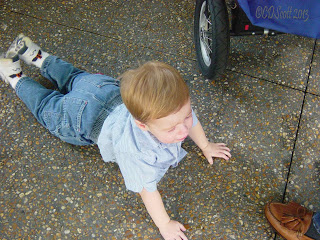
L&L is really a quick read. The meat of the method is covered in just over 100 pages. The remaining 150 pages or so cover specific common parenting scenarios and the application of the L&L tools. This section, “The Pearls of L&L” is where I go to when some new parenting issue arises. There is a pearl for everyone here, regardless of your child’s age or stage. There was a pearl or ten for me when my little boys were giving me fits with constant whining or temper tantrums.
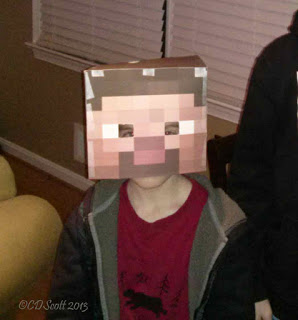
I also use that phrase when we are at an impasse and emotions (mine or theirs) are running too high. “I love you too much to argue” gives me my pass to walk away for a time and regroup. I also can say, “I’ll discuss this when you are (or I am) less upset” when unproductive emotions keep us from focusing on a solution. I thank L&L for planting those common sense seeds that will sprout even in the sometimes rocky soil of parent-child interactions.
Even with L&L at my disposal, I still frequently parent old-style with emotional outbursts of parental guilt-inducing proportions and good old-fashioned “go to your room” responses to my kids. I am human and some things just bring me to that. But when I am grounded and at my parenting best, I will put on my Andy Taylor, L&L style, and make sure my Opie gets his shot at figuring out how he can fix the mess he made for himself.

 Kay's Little Korner